
How to Write an ATS Optimized Resume
Your job search starts with your resume—not with clicking “Apply.”
Today, most companies use an Applicant Tracking System (ATS) to screen resumes before a recruiter ever sees them. ATS software scans applications for relevant skills, job titles, qualifications, and keywords to identify candidates who best match the job description.
That’s why creating an ATS optimized resume is essential. A well-qualified candidate can still be rejected if their resume isn’t ATS-friendly or doesn’t include the right keywords.
A strong resume should be clear, well-structured, and tailored to the position you’re applying for. It should highlight your most relevant experience, achievements, and skills while using language that matches the job posting.
An ATS optimized resume improves your chances of passing ATS filters, reaching a recruiter, and getting invited to an interview.
What Is a Resume and Why Is It Important?
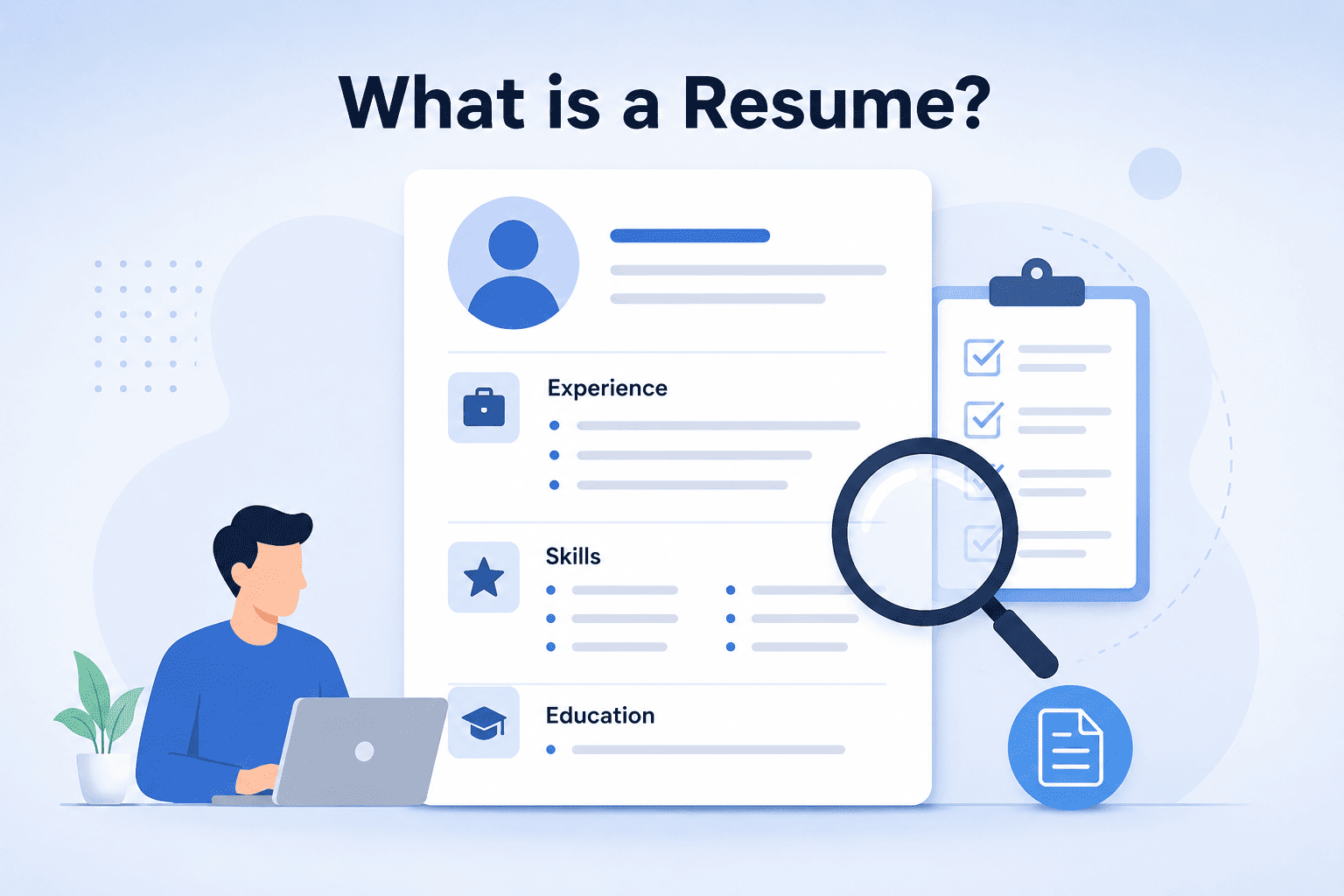
A resume is a concise summary of your professional experience, education, skills, and achievements. Its primary goal is to capture an employer’s attention and encourage them to contact you for an interview.
Important: Don’t try to include everything about yourself. Focus only on information that’s relevant to the position you’re applying for.
Recruiters want to know:
- What your current profession or specialization is.
- How much relevant experience you have.
- What problems you can solve.
- Why you’re the right candidate for the role.
A well-written professional resume always answers one key question: “Is this candidate a good fit for our job opening?”
What Format Should Your Resume Be?
The best resume format is clean, professional, and easy to read on any device.
A high-quality resume should include:
- A logical structure.
- Clear section headings.
- Consistent formatting.
- Concise, relevant content.
- A strong focus on experience and measurable achievements.
If recruiters have to search for important information, your resume starts working against you instead of for you.
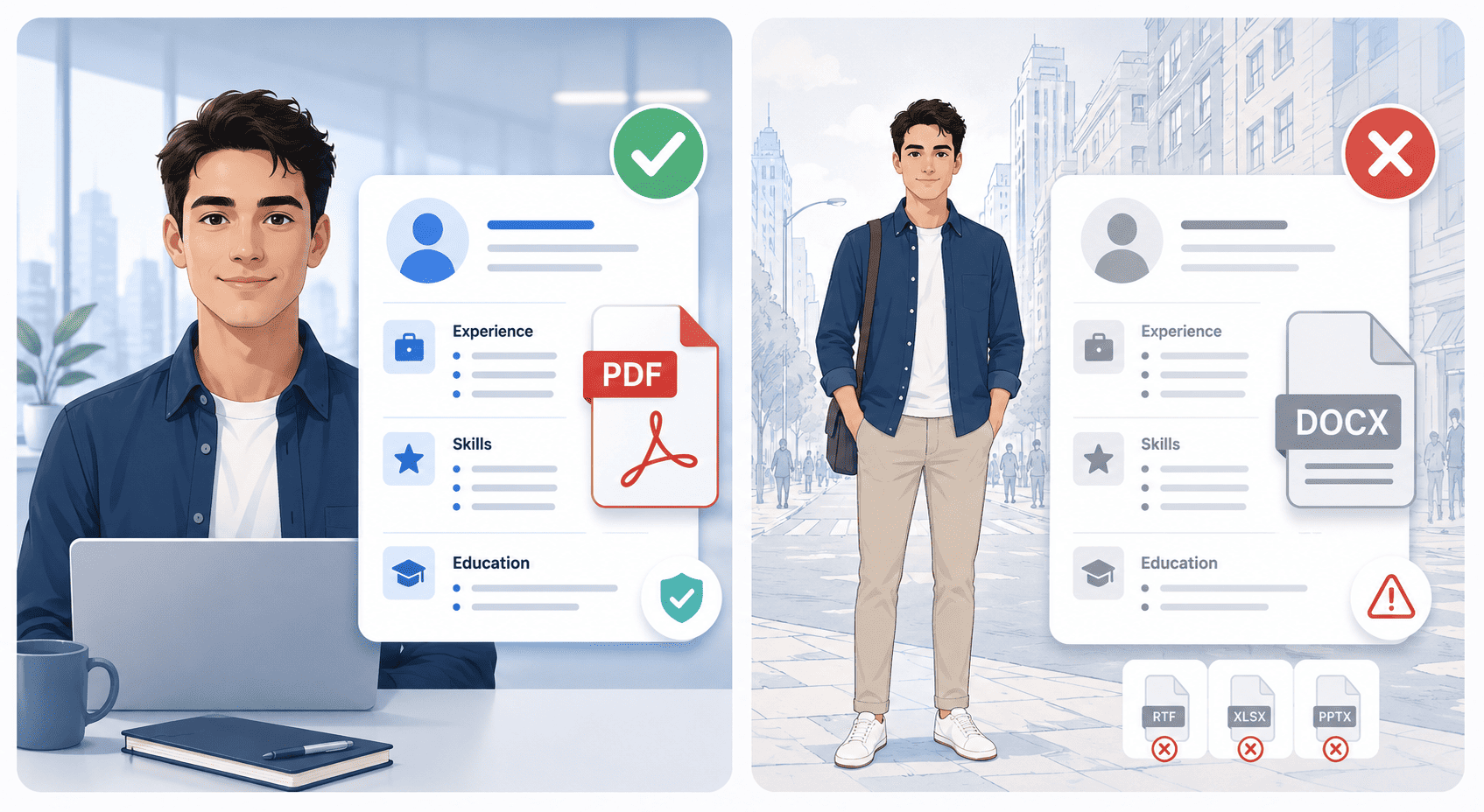
Tip: Always save your resume as a PDF before sending it to a recruiter. This ensures the formatting stays consistent across different devices and operating systems.
Resume Structure
Almost every modern resume follows the same core structure. Each section answers a specific question the employer has about you.
Let’s go through them one by one.
Contact Information
This is one of the simplest sections of your resume, yet it’s surprisingly common to make mistakes here.
Be sure to include:
- Full name.
- Phone number.
- Email address.
- City and country of residence.
- Links to your LinkedIn profile, GitHub, Behance, personal website, or portfolio—whatever is most relevant to your profession.
If you’re open to remote work or willing to relocate, mention that here as well.
Avoid including:
- Full home address.
- Passport or national ID details.
- Marital status.
- Tax identification numbers.
- Social security or national insurance numbers.
- Nationality (unless legally required).
- Religion.
- Political views.
None of this information helps employers evaluate your qualifications, and in many countries it is inappropriate to include on a resume.
Resume Photo
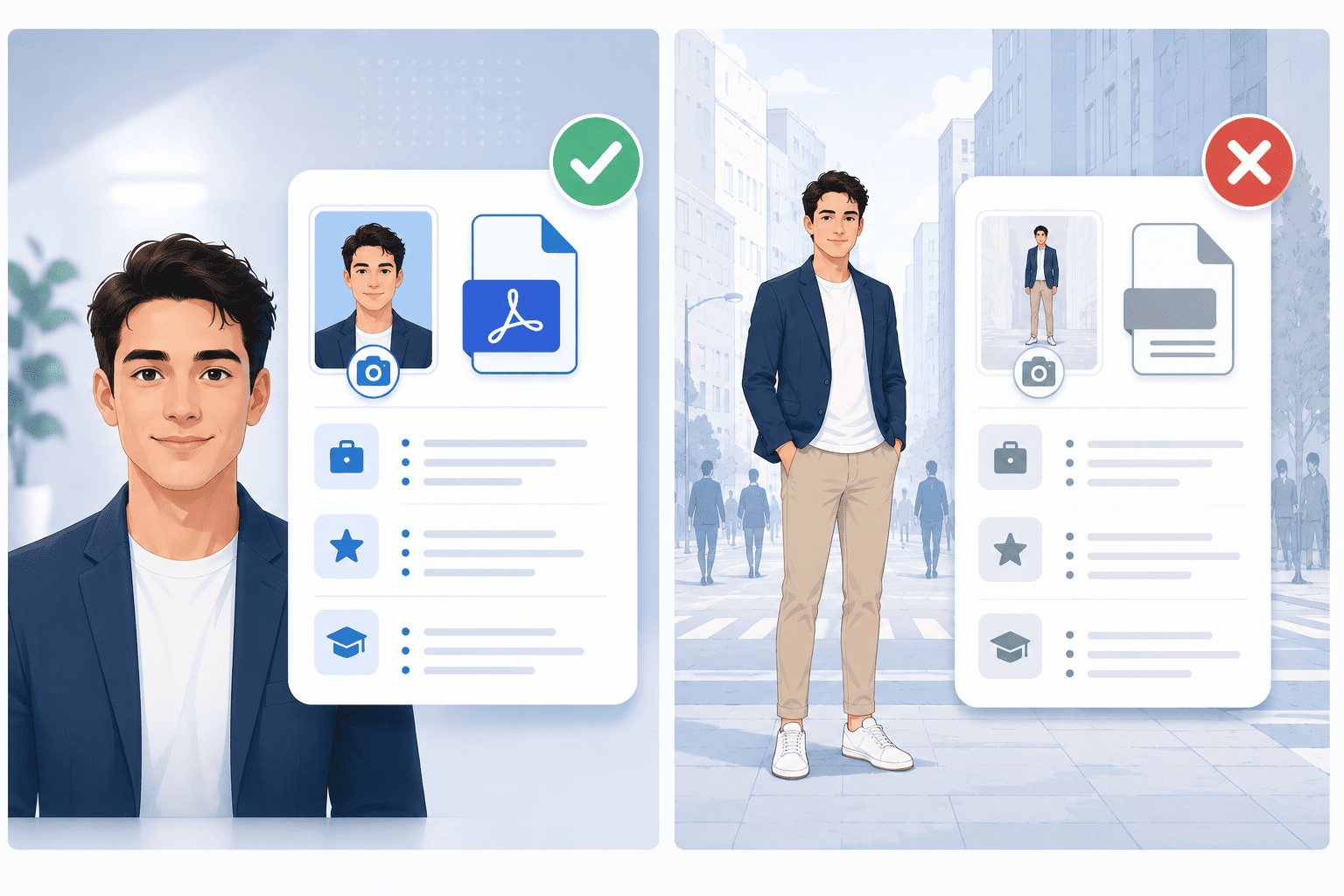
Important: Don’t use vacation photos, party pictures, family photos, heavily filtered images, or low-resolution selfies.
If you choose to include a photo, use a professional headshot with:
- A neutral background.
- Good natural lighting.
- Professional or business-casual clothing.
- Direct eye contact.
- A natural, confident expression.
If you don’t have a suitable professional photo, it’s perfectly acceptable to leave it out. Your experience, skills, and qualifications matter far more than your picture.
Desired Job Title
Your desired job title should immediately tell recruiters which role you’re applying for.
Be specific. A title like Product Manager or Frontend Developer (React) is far more effective than vague labels such as:
- “Specialist”
- “Manager”
- “Looking for an exciting opportunity”
If you’re targeting multiple career paths, create a separate resume for each role. Tailoring your ATS optimized resume to a specific position improves your chances of passing ATS filters and getting noticed by recruiters.
Professional Summary
The Professional Summary (sometimes called the About Me section) is one of the most overlooked parts of a resume.
Many candidates either leave it blank or fill it with generic statements like:
- “Responsible”
- “Works well under pressure”
- “Fast learner”
- “Team player”
These phrases appear in thousands of resumes and don’t tell employers anything meaningful about your qualifications.
Instead, briefly explain:
- How many years of experience you have.
- Which industry you’ve worked in.
- Your areas of expertise.
- The value you can bring to the employer.
Example:
Product Manager with 6+ years of experience in the fintech industry. Led the development of digital products for retail investors, managed customer journey improvements, prioritized the product backlog, and coordinated cross-functional teams. Passionate about building scalable B2C products and platform solutions.
A strong professional summary gives recruiters a clear understanding of your background within seconds.
Work Experience
Your Work Experience section is the most important part of your resume. It’s usually the first section recruiters and hiring managers review in detail.
For each position, include:
- Company name
- Job title
- Employment dates
- Key responsibilities
- Achievements and measurable results
Use a consistent format throughout your resume. For example:
- Company
- Job Title
- Employment Period
- Key Responsibilities
- Key Achievements
Whenever possible, support your accomplishments with numbers.
For example, instead of writing:
Improved the product.
Write:
Launched a new customer onboarding flow that increased registration conversion by 24%.
Even estimated metrics make a much stronger impression than vague statements.
Education
If you’re just starting your career, your Education section may be one of the most important parts of your resume.
If you already have significant work experience, place this section after your professional experience.
Include:
- Educational institution
- Degree or field of study
- Years attended
You can also list relevant certifications, professional training, or continuing education programs if they relate to the position you’re applying for.
Avoid filling your resume with dozens of short online courses simply to make the section look longer.
Skills
List the professional skills that are directly relevant to the role.
For example:
- SQL
- Python
- Figma
- Jira
- Scrum
- Product Management
- Financial Analysis
- User Research
If you have a long list of skills, group them into categories to improve readability.
Avoid including generic soft skills such as “Responsible” or “Friendly”. These qualities are much more convincing when demonstrated through your experience and achievements.
Additional Information
This section is optional, but it can help employers gain a better understanding of your professional background.
You may include:
- Foreign languages
- Publications
- Conference presentations or speaking engagements
- Professional certifications
- Membership in professional organizations or industry communities
Only include information that strengthens your application and is relevant to the role.
What Not to Include in Your Resume
Trying to include too much information can actually weaken your resume.
In most cases, you should leave out:
- Passport or national ID information
- Full home address
- Reasons for leaving previous jobs
- Expectations about your future team or workplace
- Personal or family issues
- Information about relatives
- Medical or health details
- Vacation or casual photos
- Lengthy descriptions of hobbies that are unrelated to your profession
The less irrelevant information your resume contains, the easier it is for recruiters to focus on what really matters.
A great resume doesn’t try to tell your entire life story. It highlights the experience, skills, and achievements that show you’re the right person for the job.
Conclusion
A great resume is more than just a list of previous jobs. It’s a professional document that showcases your value and helps employers quickly understand why you’re the right candidate for the role.
A clear structure, measurable achievements, relevant experience, and concise content make your resume far more effective. Tailoring your ATS optimized resume to each job description and incorporating relevant keywords can significantly increase your chances of passing ATS filters and getting invited to an interview.
FAQ
- How to Write a Resume with No Work Experience?
If you’re just starting your career, focus on the experience and skills you already have. Include relevant information such as: Education and relevant coursework Internships or work placements Academic or capstone projects related to the role Online courses and professional certifications Volunteer experience Personal projects, freelance work, or a portfolio Technical and professional skills For example, an entry-level data analyst can highlight academic data analysis projects, along with proficiency in Excel, SQL, and Power BI—even without commercial experience. Tip: Don’t try to exaggerate your experience. Employers value honesty, and real academic or personal projects make a much stronger impression than inflated responsibilities or misleading information.
- Should You Customize Your Resume for Every Job?
Absolutely. Tailoring your ATS optimized resume for each job application is one of the most effective ways to increase your chances of getting interviews. You don’t need to rewrite your entire resume every time. In most cases, it’s enough to update: The job title Your Professional Summary The most relevant achievements in your work experience Skills and keywords that match the job description Small changes can make a significant difference in how both ATS software and recruiters evaluate your application.
- How Long Should a Resume Be?
There isn’t a one-size-fits-all rule, but for most professionals, a resume should be one to two pages long. If you’re early in your career, aim to keep it to one page. Professionals with seven to ten years of relevant experience—or more—can comfortably use two pages, provided every section adds value and is relevant to the position.
- Should You Include Your Salary Expectations?
Unless the employer specifically asks for your salary expectations, you can leave this information out of your resume. If a salary range is requested, provide a realistic figure based on your experience, the current job market, and the responsibilities of the role. Setting your expectations too high may reduce your chances of getting an interview, while setting them too low can make employers underestimate your value.
- Should You List Every Job You’ve Ever Had?
No. A resume should showcase the experience that is most relevant to the position you’re applying for—not your entire employment history. Focus on your most recent and relevant roles. If an older position isn’t related to your current career path or was many years ago, you can briefly mention it in a single line or leave it out altogether. A focused, well-targeted ATS optimized resume is far more effective than one filled with unrelated experience.